 championcircle20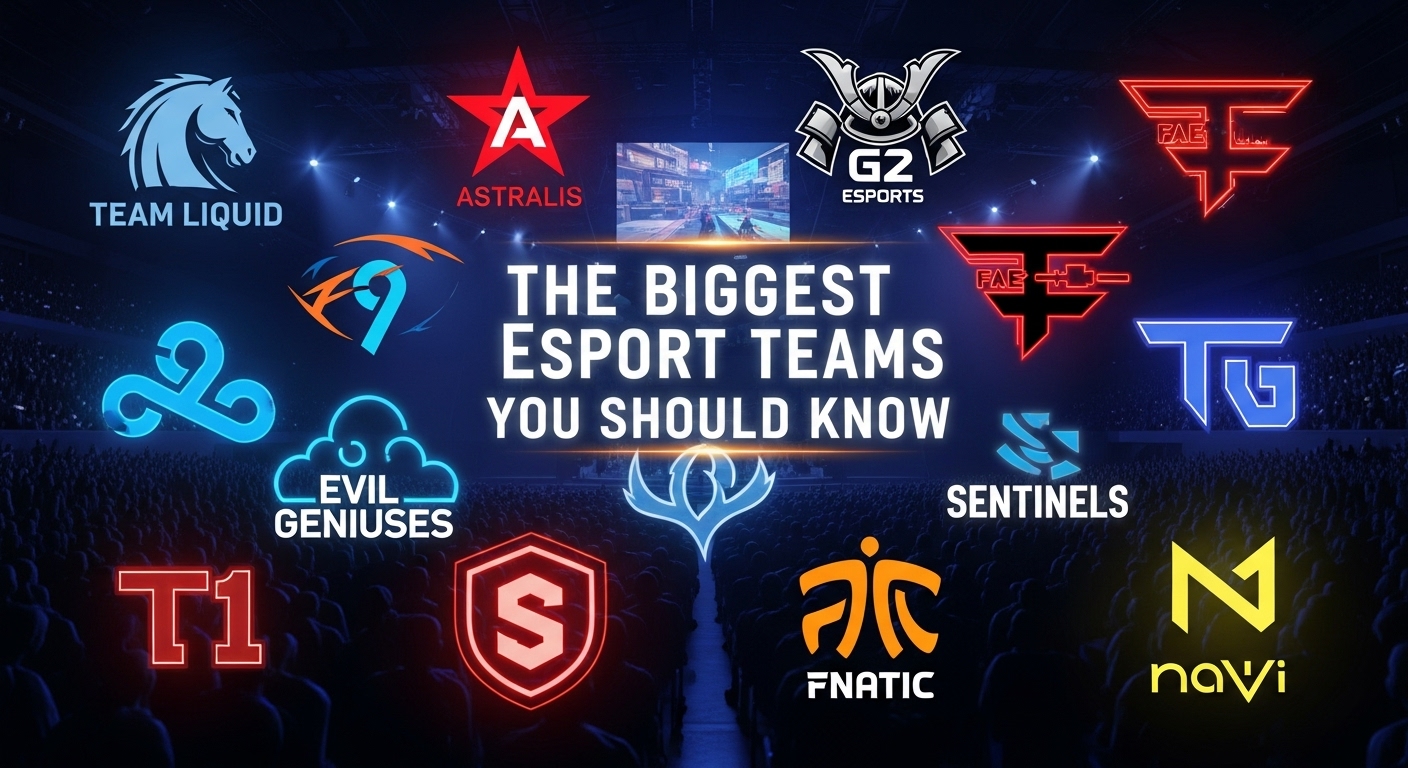
Esports has grown from small LAN gatherings to global spectacles watched by millions, with prize pools rivaling traditional sports. At the heart of this massive industry are the organizations that nurture talent, build fanbases, and turn competitive gaming into a full-fledged profession. For new fans, knowing the biggest teams helps you understand not just the competitive scene, but also the culture and storylines that make esports exciting.
Here’s a look at the biggest esports teams you should know, the games they dominate, and why they’ve become household names in competitive gaming.
Team Liquid
Team Liquid is one of the most iconic organizations in esports, and for good reason. Founded in the Netherlands in 2000, the team originally focused on StarCraft before expanding into other games. Today, Liquid is involved in titles ranging from League of Legends and Counter-Strike: Global Offensive to Dota 2, VALORANT, and even World of Warcraft.
What makes Team Liquid stand out is its consistent ability to adapt. The organization has lifted trophies in multiple games, proving that its infrastructure and coaching systems can produce success across very different competitive landscapes. Their Dota 2 squad, in particular, has cemented Liquid’s legacy by winning The International in 2017 and remaining a constant contender at the highest levels.
With top-tier facilities, sponsorship deals, and a strong emphasis on player development, Team Liquid is more than just a winning team—it’s a brand that symbolizes professionalism in esports.
Fnatic
Fnatic is one of Europe’s most recognized esports organizations. Established in 2004 in London, Fnatic quickly rose to fame in the early Counter-Strike days and has since become a powerhouse across multiple titles.
Their League of Legends team is particularly noteworthy, having been a dominant force in the European scene since the very beginning. Fnatic was the very first team to win the League of Legends World Championship in 2011, setting a precedent for years of competitive excellence.
Beyond League, Fnatic has also fielded successful rosters in CS:GO, where they’ve won multiple Majors, as well as in games like Dota 2 and VALORANT. Known for their iconic orange-and-black branding, Fnatic has built a massive global fanbase that extends far beyond Europe.
Cloud9
Based in Los Angeles, Cloud9 has become one of North America’s most beloved esports organizations. Founded in 2013, Cloud9 rapidly made a name for itself through its charismatic players and passionate fan engagement.
The team’s early success in League of Legends, where they dominated the North American scene, helped solidify their reputation. Cloud9 has since expanded into games like VALORANT, CS:GO, Hearthstone, and Super Smash Bros. Their 2018 CS:GO Major Championship victory remains one of the most historic moments for North American esports, as it marked the first time a North American team won a Major.
Cloud9 is also known for its innovative approach to content and branding. The organization does an excellent job of connecting with fans, which has made them one of the most recognized names in esports globally.
G2 Esports
G2 Esports, founded in 2014 by former professional League of Legends player Carlos “Ocelote” Rodríguez, has grown into one of the most dominant and entertaining organizations in the world. Based in Berlin, G2 is best known for its League of Legends team, which has won multiple European titles and consistently competes on the international stage.
G2’s culture is built on flair, confidence, and entertainment, both in and out of the game. Their social media presence is famous for its playful banter and creative content, making them as entertaining off the server as they are on it.
Beyond League, G2 has fielded successful teams in CS:GO, VALORANT, and Rocket League. Their CS:GO squad, in particular, has been one of Europe’s top rosters, regularly competing for titles. G2’s combination of competitive dominance and unique personality makes them one of the most influential teams in esports.
T1
Formerly known as SK Telecom T1, T1 is a South Korean organization synonymous with success in League of Legends. If you follow competitive gaming, you’ve likely heard of their legendary mid-laner, Faker, widely considered the greatest League of Legends player of all time.
T1 has won the League of Legends World Championship three times, more than any other organization, cementing its legacy as the most decorated team in the game’s history. Their dominance throughout the years has made them a global brand and a symbol of excellence in esports.
Beyond League of Legends, T1 has also ventured into games like Dota 2, VALORANT, and Fortnite, but it is their LoL roster that keeps them firmly in the spotlight.
Evil Geniuses
Evil Geniuses (EG) is one of the oldest and most storied esports organizations, founded in 1999. Based in the United States, EG has built a reputation for being innovators and risk-takers.
Their most famous success story comes from Dota 2, where they won The International in 2015. That victory solidified EG as a global powerhouse and gave North America one of its proudest moments in esports history.
Over the years, Evil Geniuses has also been a major player in games like CS:GO, StarCraft, and VALORANT. Known for their iconic blue-and-black branding, EG represents longevity and adaptability in an industry that changes rapidly.
Natus Vincere (Na’Vi)
Natus Vincere, often shortened to Na’Vi, is a Ukrainian organization that has been a staple of the esports scene since its founding in 2009. Na’Vi’s claim to fame came in Counter-Strike, where they became one of the most dominant teams in history. They also achieved international glory in Dota 2 by winning the first-ever International in 2011.
What makes Na’Vi particularly special is the loyalty of its fanbase. The team has remained one of the most popular organizations in Eastern Europe and beyond, thanks to its legacy of legendary players and unforgettable performances.
Na’Vi continues to thrive, especially in CS:GO, where they remain a top-tier competitor with star players like s1mple, widely regarded as one of the best FPS players of all time.
FaZe Clan
FaZe Clan started as a Call of Duty trick-shotting group on YouTube in 2010, but what began as a content collective has evolved into one of the biggest esports and lifestyle brands in the world. Today, FaZe is involved in multiple competitive titles, including CS:GO, Call of Duty, Fortnite, and VALORANT.
Their CS:GO roster has been especially successful, winning several international championships and consistently ranking among the best in the world. But FaZe’s influence goes beyond gaming. They’ve built a lifestyle brand that blends esports with music, entertainment, and streetwear culture, appealing to a much wider audience than traditional teams.
FaZe Clan’s ability to merge gaming with pop culture has made them one of the most recognizable names in esports and beyond.
OG
OG may not have the decades-long history of some teams, but they’ve carved out an extraordinary legacy in Dota 2. Founded in 2015, OG shocked the world by winning The International in 2018 and then repeating the feat in 2019—making them the first team in history to win back-to-back Internationals.
Their success was built on teamwork, innovation, and resilience, capturing the hearts of fans around the world. While OG has expanded into other games like Counter-Strike and VALORANT, their name will always be most closely tied to Dota 2.
OG is proof that even newer organizations can make a lasting mark on esports history.
Final Thoughts
Esports is a fast-moving industry where new teams rise and fall every year. Yet, the organizations mentioned above have proven that building a strong legacy is about more than winning—it’s about community, culture, and innovation.
Whether it’s Team Liquid’s global dominance, Fnatic’s history-making runs, or T1’s legendary performances led by Faker, these teams are the backbone of competitive gaming. They represent the growth, diversity, and passion that make esports one of the most exciting industries in the world today.
For fans and newcomers alike, keeping an eye on these organizations means you’ll always be connected to the biggest moments and stories in esports.